Welcome to a new frontier in Auckland adventure: Hu-Nu-A Packrafting.
Imagine hiking into the Hunua Ranges, launching your packraft on a forest-lined stretch of the Wairoa River, and gliding through bush, waterfalls, and hidden valleys, all within reach of the city.
This isn’t a fantasy — with careful route selection, safety planning, and expert guidance, it’s a compelling new option for urban paddlers and adventurers alike.
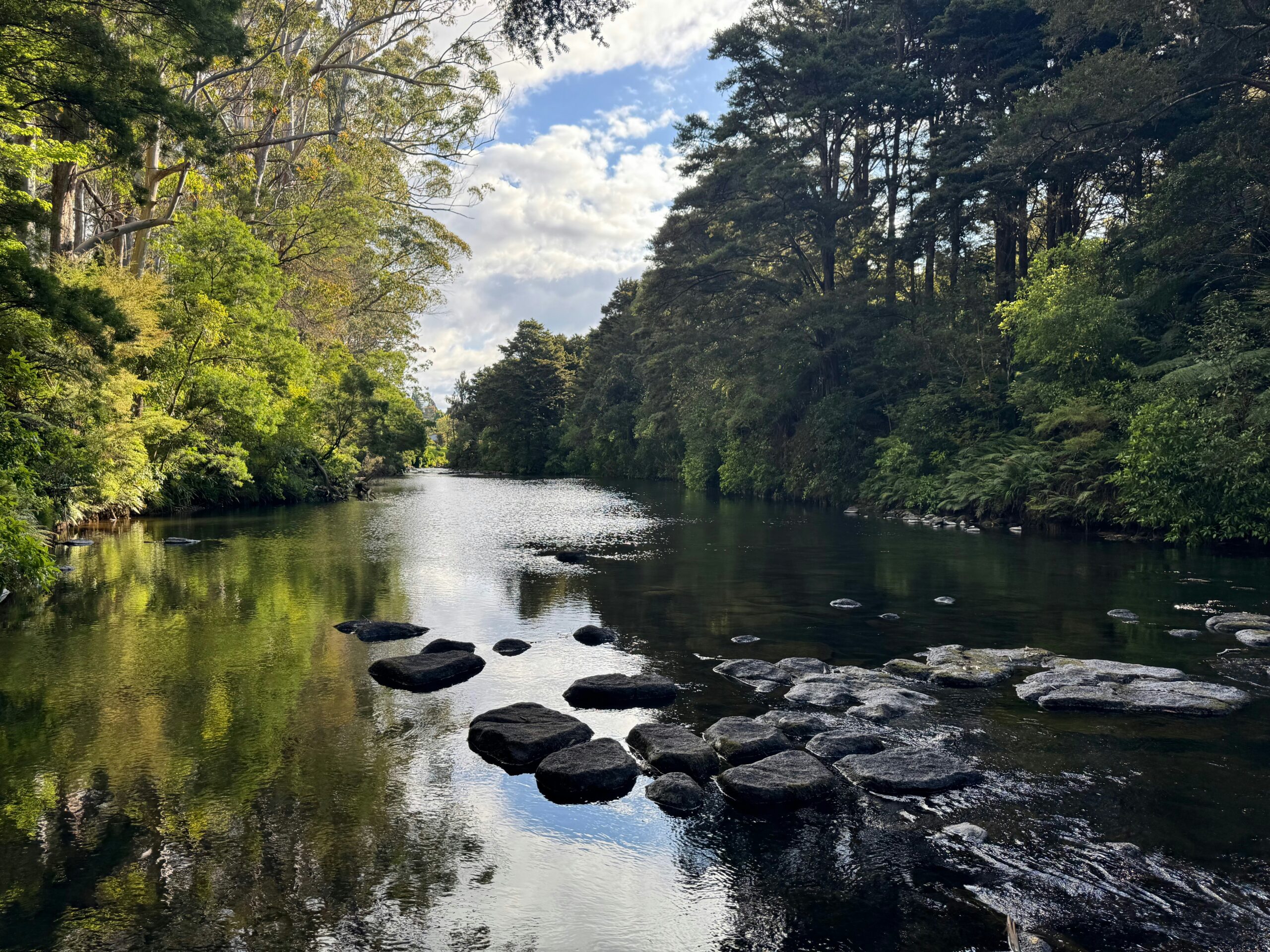
The Hunua Ranges lie to the south-east of Auckland, forming a significant forested catchment that supports both ecological diversity and the region’s water supply. Intersected by creeks, tributaries, and the Wairoa River, the ranges feed into the landscape that transitions from bush ridge to coastal plain.
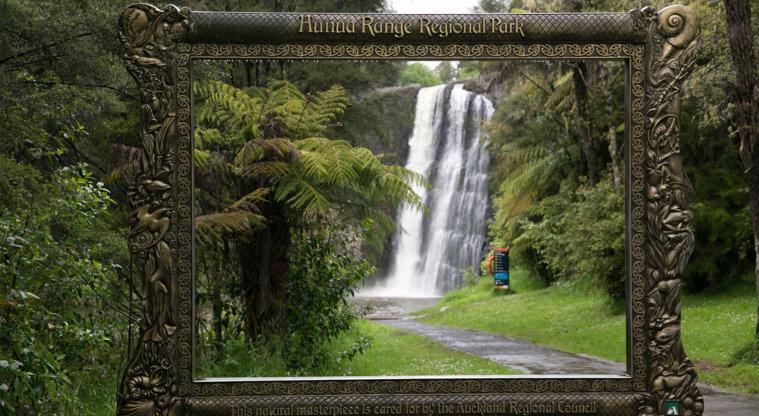
The Wairoa River originates in the Hunua catchment and flows through Clevedon before entering the Hauraki Gulf. A highlight feature is Hūnua Falls, a waterfall of about 30 m drop over a basalt lava plug (a remnant of volcanic intrusions along a fault line).
Below the falls, the river’s mean downstream flow (near Clevedon) is approximately 2.6 m³/s (though it varies with seasonal rain and inflows).
In its upper reaches, the Wairoa courses through native bush and narrow river valleys. Some walking tracks and sections of the Te Araroa Trail parallel or cross the river, especially through the Hunua terrain and into Clevedon.
These geographical traits make the river and ranges an ideal candidate for packraft-friendly exploration: walk-in access, forested margins, manageable current gradient, and natural points of egress or side-channel escapes.
Gradient & structure: Though not a wild whitewater river, there may be riffles, log jams, narrowing, and shallow substrate zones to negotiate.
Our tour takes a particular section we call the Hunua Hydro Glide. Access a forest track that runs parallel to the Wairoa.
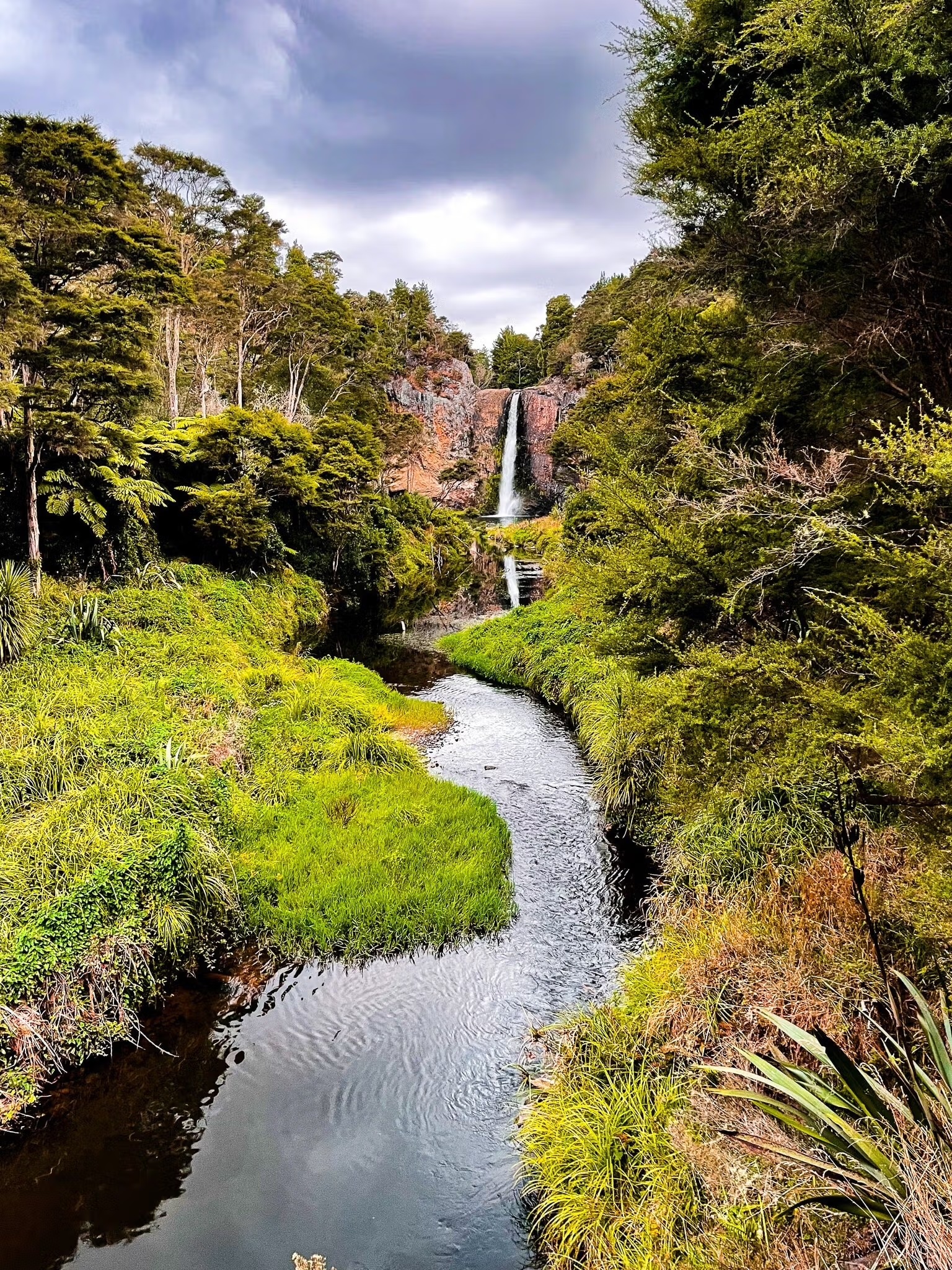
Start below the 30m (98ft) Hunua Falls and be amazed by the basalt lava plug plunge pool. Then navigate through bush-lined meanders, eddy-turns, light rapids/riffles, and occasional log-obstructed pools. The pace is gentle with occasional technical decisions.
Scenic interest & interpretive stops
Along the way, guides may pause at native bush margins, vantage points over the gorge, side creek junctions, or historical sites (e.g. old logging tracks or Te Araroa crossings).
The Hunua Ranges form a critical water-catchment crown east of metropolitan Auckland. Their native forest, ridgelines, and hydrology feed rivers and streams that reach down toward the Hauraki Gulf. Among these, the Wairoa River stands out as a river with hidden potential.
Hūnua Falls, perched on the river’s mid-course, is a basaltic drop around 30 m built over volcanic plug intrusions.
Upstream of that falls, the river courses through forested gullies, side creeks, and gentle gradients — perfect terrain for an accessible yet immersive packrafting route.
Below the falls, the river passes through Clevedon and flows toward the coast, but navigation beyond falls is not viable without portage or alternative routes. The average downstream flow is modest (≈2.6 m³/s near Clevedon) but dynamically influenced by rainfall in the Hunua catchment.
Nearby, Waharau Regional Park lies adjacent to the eastern slopes of the Hunua Ranges, adjoining the southern edges of the catchment, and provides walk-in access corridors and ecological corridors favorable to route linkages.
Also, walking tracks in the region, including parts of the Te Araroa Trail, often trace or cross the Wairoa system, enabling multi-use connectivity.
2 day option: full immersion, adapted to the local geography and risk envelope:
Walk in over forest tracks toward Wairoa tributaries.
Main fous is on the “pack” part of packrafting, inclusive of packing skills, hiking, navigating and campcraft.
Scout downstream segments: read eddies, inspect obstacles, identify safe lines.
Camp near put-in zone.
Launch from pre-scouted put-in below Hūnua Falls.
Paddle through woven channels, bush-fringed creek mouths, and riffled sections.
Pause at scenic junctions, forest margins, or shallow riffle zones.
Exit via predetermined bank or stream path.
Depending on water level, the route difficulty will range from Grade I to II — gentle but requiring decision-making and boat skills.
Yes — the Hunua Packrafting Trip is designed to bring guided packraft experience into the Auckland region, leveraging the Hunua Ranges and Wairoa River as a local wild water corridor.
If guided properly and on gentle water, it’s fully accessible. We teach boat control, rescues, and safe decision heuristics to help novices become confident paddlers.
Options are limited currently, but the Hunua–Wairoa system that we use is particularly promising.
We will provide packraft, paddle, PFD, helmet, jacket and dry sacks.
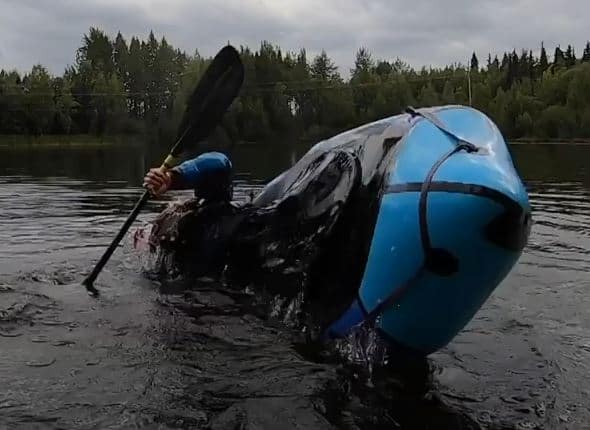
Yes — basic water confidence is essential. During training, we build self-rescue skills, bracing, and safe re-entry protocols so that paddlers can react confidently.
Anytime of year is fine. Winter is cold but we provide drysuits. Summer is obviously warm. Autumn and Spring are mild but offer the best flows.
As you paddle, your guide can point out:
Forest ecosystems: native kauri, rimu, rātā, and regenerating understory in Hunua ranges
Streamside flora & fauna: freshwater invertebrates, native fish (if present), native birds
Geological features: basalt plugs at the falls, fault lines, bedrock exposures
Landscape history: former logging routes, Maori place names, hydrological shifts
Catchment dynamics: how rainfall in the ridges flows into creeks, collects, then manifests in the river you paddle
These storylines enrich experience and deepen engagement.
Transferrable skills: Workshops on river reading, safety, rescue, and trip planning gain real-world context here. Our participants don’t just paddle—they become decision-makers on the water.
Ecological & interpretive value: The route winds through native bush, past stream junctions, geological features, and waterfall zones. You will experience local flora/fauna interpretation (bats, birds, forest ecology), Maori place stories, and hydrology.
Reserve your seat on the next trip
Discuss custom private or corporate group experiences
Explore progression pathways toward more advanced packrafting (river systems beyond Auckland)
Unfold your packraft, step into Hunua forest, and launch on the Wairoa — let us show you a river in your backyard you never knew you had.
Welcome to a new frontier in Auckland adventure: Hu-Nu-A Packrafting.
Imagine hiking into the Hunua Ranges, launching your packraft on a forest-lined stretch of the Wairoa River, and gliding through bush, waterfalls, and hidden valleys, all within reach of the city.
This isn’t a fantasy — with careful route selection, safety planning, and expert guidance, it’s a compelling new option for urban paddlers and adventurers alike.
The Hunua Ranges lie to the south-east of Auckland, forming a significant forested catchment that supports both ecological diversity and the region’s water supply. Intersected by creeks, tributaries, and the Wairoa River, the ranges feed into the landscape that transitions from bush ridge to coastal plain.
The Wairoa River originates in the Hunua catchment and flows through Clevedon before entering the Hauraki Gulf. A highlight feature is Hūnua Falls, a waterfall of about 30 m drop over a basalt lava plug (a remnant of volcanic intrusions along a fault line).
Below the falls, the river’s mean downstream flow (near Clevedon) is approximately 2.6 m³/s (though it varies with seasonal rain and inflows).
In its upper reaches, the Wairoa courses through native bush and narrow river valleys. Some walking tracks and sections of the Te Araroa Trail parallel or cross the river, especially through the Hunua terrain and into Clevedon.
These geographical traits make the river and ranges an ideal candidate for packraft-friendly exploration: walk-in access, forested margins, manageable current gradient, and natural points of egress or side-channel escapes.
Gradient & structure: Though not a wild whitewater river, there may be riffles, log jams, narrowing, and shallow substrate zones to negotiate.
Our tour takes a particular section we call the Hunua Hydro Glide. Access a forest track that runs parallel to the Wairoa.
Start below the 30m (98ft) Hunua Falls and be amazed by the basalt lava plug plunge pool. Then navigate through bush-lined meanders, eddy-turns, light rapids/riffles, and occasional log-obstructed pools. The pace is gentle with occasional technical decisions.
Scenic interest & interpretive stops
Along the way, guides may pause at native bush margins, vantage points over the gorge, side creek junctions, or historical sites (e.g. old logging tracks or Te Araroa crossings).
The Hunua Ranges form a critical water-catchment crown east of metropolitan Auckland. Their native forest, ridgelines, and hydrology feed rivers and streams that reach down toward the Hauraki Gulf. Among these, the Wairoa River stands out as a river with hidden potential.
Hūnua Falls, perched on the river’s mid-course, is a basaltic drop around 30 m built over volcanic plug intrusions.
Upstream of that falls, the river courses through forested gullies, side creeks, and gentle gradients — perfect terrain for an accessible yet immersive packrafting route.
Below the falls, the river passes through Clevedon and flows toward the coast, but navigation beyond falls is not viable without portage or alternative routes. The average downstream flow is modest (≈2.6 m³/s near Clevedon) but dynamically influenced by rainfall in the Hunua catchment.
Nearby, Waharau Regional Park lies adjacent to the eastern slopes of the Hunua Ranges, adjoining the southern edges of the catchment, and provides walk-in access corridors and ecological corridors favorable to route linkages.
Also, walking tracks in the region, including parts of the Te Araroa Trail, often trace or cross the Wairoa system, enabling multi-use connectivity.
2 day option: full immersion, adapted to the local geography and risk envelope:
Day 1 – Traverse & Scout
Walk in over forest tracks toward Wairoa tributaries.
Main fous is on the “pack” part of packrafting, inclusive of packing skills, hiking, navigating and campcraft.
Scout downstream segments: read eddies, inspect obstacles, identify safe lines.
Camp near put-in zone.
Day 2 – Flow & Explore
Launch from pre-scouted put-in below Hūnua Falls.
Paddle through woven channels, bush-fringed creek mouths, and riffled sections.
Pause at scenic junctions, forest margins, or shallow riffle zones.
Exit via predetermined bank or stream path.
Depending on water level, the route difficulty will range from Grade I to II — gentle but requiring decision-making and boat skills.
Is there a packrafting tour in Auckland?
Yes — the Hunua Packrafting Trip is designed to bring guided packraft experience into the Auckland region, leveraging the Hunua Ranges and Wairoa River as a local wild water corridor.
How difficult is packrafting for beginners?
If guided properly and on gentle water, it’s fully accessible. We teach boat control, rescues, and safe decision heuristics to help novices become confident paddlers.
Where can you packraft near Auckland?
Options are limited currently, but the Hunua–Wairoa system that we use is particularly promising.
What gear do I need for packrafting?
We will provide packraft, paddle, PFD, helmet, jacket and dry sacks.
Do I need to know how to swim?
Yes — basic water confidence is essential. During training, we build self-rescue skills, bracing, and safe re-entry protocols so that paddlers can react confidently.
When is the best time to attempt Hu-Nu-A packrafting?
Anytime of year is fine. Winter is cold but we provide drysuits. Summer is obviously warm. Autumn and Spring are mild but offer the best flows.
As you paddle, your guide can point out:
Forest ecosystems: native kauri, rimu, rātā, and regenerating understory in Hunua ranges
Streamside flora & fauna: freshwater invertebrates, native fish (if present), native birds
Geological features: basalt plugs at the falls, fault lines, bedrock exposures
Landscape history: former logging routes, Maori place names, hydrological shifts
Catchment dynamics: how rainfall in the ridges flows into creeks, collects, then manifests in the river you paddle
These storylines enrich experience and deepen engagement.
Transferrable skills: Workshops on river reading, safety, rescue, and trip planning gain real-world context here. Our participants don’t just paddle—they become decision-makers on the water.
Ecological & interpretive value: The route winds through native bush, past stream junctions, geological features, and waterfall zones. You will experience local flora/fauna interpretation (bats, birds, forest ecology), Maori place stories, and hydrology.
Reserve your seat on the next trip
Discuss custom private or corporate group experiences
Explore progression pathways toward more advanced packrafting (river systems beyond Auckland)
Unfold your packraft, step into Hunua forest, and launch on the Wairoa — let us show you a river in your backyard you never knew you had.