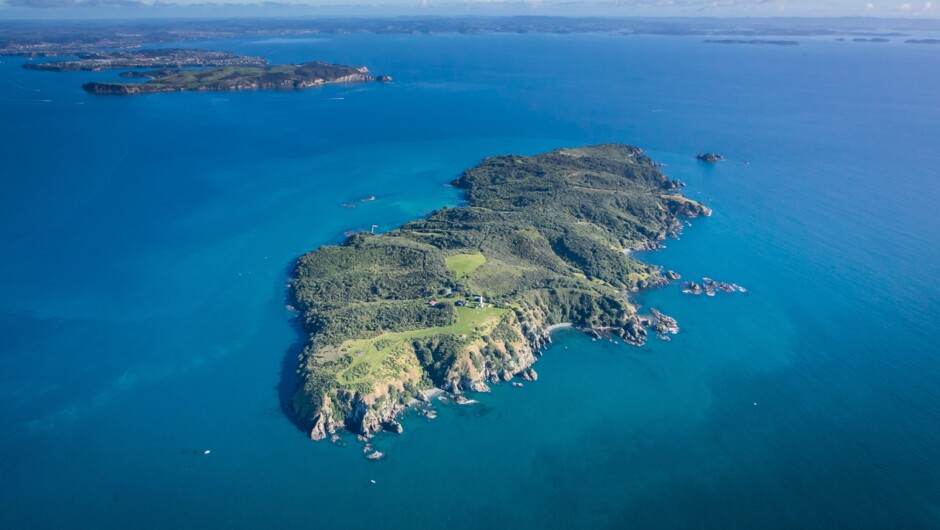
Kiwi Spotting on a Guided Nocturnal Walk on Tiritiri Matangi
WHICH KIWI SPECIES LIVES ON TIRITIRI MATANGI
The little spotted kiwi, kiwi pukupuku, is the species established on Tiritiri Matangi. They are the smallest of the five kiwi species, weighing about a kilogram for adult females, and they were one of the first kiwi species translocated to the island as part of the long-running restoration programme. The population is now self-sustaining and breeding.
Little spotted kiwi are nocturnal, ground-dwelling, and highly territorial. They forage in leaf litter for invertebrates, fruit, and seeds, and they make a distinctive ascending whistle call to mark their range and communicate with mates. If you are quiet on the walk, you are likely to hear them well before you see them.
HONEST ODDS OF SEEING A KIWI ON THE TOUR
Hearing a kiwi on Tiritiri Matangi during the nocturnal walk is very likely, and most twilight tour groups report multiple calls across the evening. Actually seeing one cross the track is less guaranteed. We tell guests to expect a high chance of audio encounters and a moderate chance of a visual sighting, depending on the weather, the moon phase, and how quietly the group moves.
Cloudy, still nights tend to produce the best results. Bright moonlight makes the birds more cautious and pushes them deeper into the bush. The guide chooses the route on the night based on recent activity and conditions, so the walk is never a fixed script.
HOW THE GUIDED WALK WORKS AFTER DINNER
After the sunset dinner and the kororā landing, the group regathers for a two-hour guided walk through the bush tracks behind the bunkhouse. The guide carries a red-filtered torch and stops frequently to listen and to point out tuatara, wētā, kiwi sign, and the night calls of morepork. The pace is slow, and there is plenty of time to stand still and let the bush settle around you.
The walk is not a route march. It is a guided listening experience as much as a walking one. If you have ever been on a daytime track in New Zealand bush and wondered what the same place sounds like at night, this is the answer. Most guests come back from the walk noticeably quieter than they went out, in a good way.
ETHICS, LIGHTING, AND DISTANCE
We never use white torchlight on kiwi, we never chase a sighting, and we never play call recordings to lure birds in. The DOC visitor protocols for the island are strict, and the tour operates within them in full. If a kiwi crosses the track, the group stops, stays quiet, and lets the bird move on at its own pace.
If you want to support kiwi recovery in New Zealand, the most useful thing a visitor can do is back the conservation infrastructure that makes islands like Tiritiri Matangi possible. Booking the tour helps, and so does talking honestly online about what the experience involves rather than overselling guaranteed sightings.
Keep Exploring Auckland Kayaking Adventures
From wildlife encounters and twilight paddles to island expeditions and harbour tours, our guides are designed to help you choose the experience that’s right for you. Browse the rest of our collection for expert tips, trip planning advice, and inspiration for your next adventure.