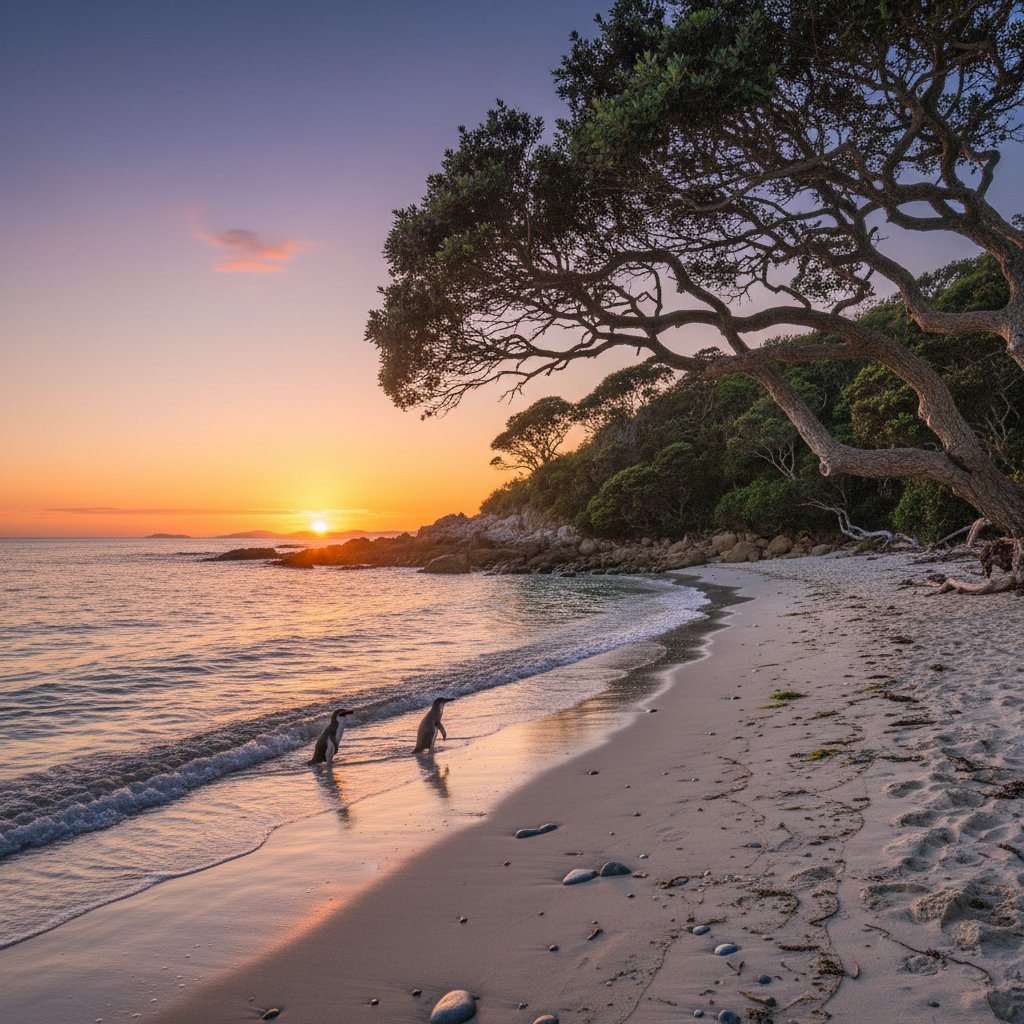
Tuatara on Tiritiri Matangi: Meeting New Zealand's Living Dinosaur
WHAT TUATARA ACTUALLY ARE
Tuatara are the sole surviving members of an ancient reptile order, Rhynchocephalia, that dates back over two hundred million years. They are not lizards, although they look superficially like one. They have a third parietal eye on the top of the head, two rows of upper teeth that interlock with a single lower row, and a metabolism so slow that some individuals live well past their hundredth birthday.
Seeing a tuatara in the wild is rarer than people realise. Most New Zealanders only ever see one behind glass at a zoo or wildlife park. On Tiritiri Matangi the species is reintroduced, free-roaming, and breeding, which makes the island one of the few accessible places in the country where a non-specialist visitor has a realistic chance of meeting one in their natural habitat.
WHERE TUATARA LIVE ON TIRITIRI MATANGI
Tuatara on Tiritiri Matangi favour the seabird burrow zones along the cliffs and the coastal forest edges. They often share burrows with petrels and shearwaters, which keeps both species warmer through the colder months and gives the tuatara a steady food source from spilled scraps and invertebrates around the burrow entrance.
On warm summer nights they emerge from their burrows to bask in the residual heat from the ground or to hunt invertebrates around the leaf litter. The bush walk on the twilight tour passes through several known tuatara areas, and the guide will quietly point them out without crowding the animal.
HOW THE GUIDED WALK HELPS YOU SEE THEM
Tuatara are masters of holding still. A casual walker can pass within a metre of one and never see it. The guides on the twilight tour know the burrow systems, the typical emergence pattern for the time of year, and the colour and texture cues that give a tuatara away against the bark and leaf litter, so the spotting rate on a guided night is significantly higher than a self-guided ferry day trip.
We use only red-filtered torches near tuatara, we keep the group quiet, and we do not handle the animals under any circumstances. The DOC ranger station on the island monitors the population, and the tour operates within their guidelines for nocturnal visitation.
WHY TUATARA MATTER FOR THE ISLAND AND THE COUNTRY
Tuatara are a living link to a New Zealand that existed before mammals, before flowering plants, and before most of the country’s current ecosystem evolved. The reintroduction to Tiritiri Matangi is part of a wider conservation programme that has expanded their range from a handful of offshore islands back into mainland-island sanctuaries.
Meeting a tuatara on the island makes the cost of the tour easier to justify for many guests. You are supporting a conservation model that protects rare species and gives ordinary visitors a reason to care. If you are planning a Hauraki Gulf trip and want to combine wildlife encounters, we link the twilight tour to our other island and coastal experiences from the main tours page.
Keep Exploring Auckland Kayaking Adventures
From wildlife encounters and twilight paddles to island expeditions and harbour tours, our guides are designed to help you choose the experience that’s right for you. Browse the rest of our collection for expert tips, trip planning advice, and inspiration for your next adventure.